
Reseña
The Financial Times, 13.09.2025
Mark Mazower, historiador y profesor en Columbia University
-
The political historian explores how the idea of ‘the west’ has moved a long way from its origins
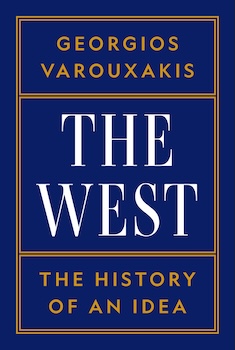
Georgios Varouxakis
Princeton University Press, 2025
The gloomsters are back, along with their world-historical bugbear — the decline of the west. Shortly after entering office, US vice-president JD Vance warned in March that without a clampdown on illegal immigration, “we cannot rebuild western civilisation”. The Wisconsin supreme court race, Elon Musk mused the following month, could “decide the future of America and Western Civilisation”. Doing their bit, Republican legislators across the US are now seeking the reintroduction of Western Civ courses into school and college curricula.
This “west” people are so worried about has a familiar story behind it: it originates in the ancient world in the conjoining of classical Greek philosophy and the Hebrew Bible and then weaves its way through medieval Christendom, the Renaissance and the Enlightenment to create the mostly European legacy we are supposedly at risk of throwing away today.
Oddly, however, most if not all of the “great minds” who feature in the average Plato to Nato pantheon possessed zero consciousness of belonging to “the west”. Aristotle would have been mystified by the idea; so would Aquinas or John Locke. For all of them, the west was merely a point on the compass. When did the term move beyond geography to encompass the kinds of ambitious cultural, spiritual and political claims that are now attached to it?
It is this question that Georgios Varouxakis, a historian of political thought at Queen Mary University of London, sets out to answer. What emerges in his hands is a surprisingly recent story of ideological and intellectual complexity that unfolds over some two centuries. As he writes: “‘The West’ as a potential political entity based on civilisational commonality is a modern idea that arose in the first half of the nineteenth century.” It mostly involves intellectuals duelling as they like to do over “big ideas”. But these thinkers are for the most part beset by civilisational doubts, anxiety and nostalgia. By the end, one realises that there are as many wests as there are fears about the world and where it is headed.
In the 17th and 18th centuries things were very different: when the old notion of Christendom was replaced by a secularised concept of Europe as the home of civilised life, the continent itself was conceptualised chiefly in terms of a northern and a southern half. But this slowly dropped out of use and the “west” began to be used more broadly in the years after Napoleon’s defeat in 1815, when it came to refer to two distinct but interconnected sets of ideas.
Some Europeans were more worried than before about the rise of Russia — the Tsar’s troops had reached the gates of Paris — and questioned whether it really belonged at the heart of the continent’s affairs. At the same time, others looked across the Atlantic where they saw a new future for humanity beckoning as a result of the successful American struggle against European colonial rule.
Varouxakis argues that the enormously influential French philosopher Auguste Comte was perhaps the first to talk about “western” values systematically in anything close to the modern sense: his particular dream was of a modern world order in which a “Western Republic” based on new spiritual values would unite “the Vanguard of Humanity”, and usher in a world without conquests or empire, in which civilisation was spread by example and benevolence. But others in the 19th century found the idea of the “west” a vehicle for their own somewhat different obsessions.
A specifically Atlanticist argument, for example, was made by European immigrants to the US. At a time when Americans used the term quite differently — to denote their country’s unique frontier destiny — it was these newcomers who sought to assert the common values of Europe and the Americas.
As early as 1853 the German-born Columbia University political scientist Francis Lieber — one of the founders of the modern laws of war — was using the phrase “Western History” in this way; acknowledging its novelty, he apologised for deploying a term “so indistinct that I must explain what is meant by it”.
Lieber’s heirs were proponents of American intervention in the two world wars. The west, wrote journalist Walter Lippmann, was a programme for America in international relations and as such it formed an increasingly visible part of the mindset of cold war internationalism.
The cold war American vision of the west and its civilisation was a strange blend of gung-ho techno-optimism and spiritual and cultural pessimism
It is striking however that the term itself appeared neither in Churchill’s famous Iron Curtain speech of 1946, nor in the Truman Doctrine of the following year and it would have been interesting to have had Varouxakis’s thoughts on the limitations of the term and its influence. As it is, we get its champions, in all their variety, but not much about the term’s critics. A certain wooliness always seems to have surrounded it that made it useful to some and deeply frustrating to others.
The overarching trajectory is clear: what started out as a bright new liberal and even radical conception of the spread of republicanism around the world turned over time into something darker and more gloomy. The cold war American vision of the west and its civilisation was a strange blend of gung-ho techno-optimism and spiritual and cultural pessimism, which began with the German Oswald Spengler’s The Decline of the West (1918) before being developed further by interwar Catholic thinkers in France and Spain.
Unlike Spengler, for whom the west’s decline was inevitable — indeed long under way and irreversible — the Frenchman Henri Massis, a conservative journalist and intellectual, wrote at length of the need to mount a defence of the west and its heritage. Spengler’s west was distinctly centred on Germany and central Europe, whereas for Massis the west was the spiritual heir to Greece and Rome and its centre lay further south, along the shores of the Mediterranean. Massis’s influence is evident upon the poet TS Eliot, whose own writings between the wars manifested a very similar sense of cultural anxiety.
It is this sense of world-historical despair, with unmistakable religious and racial undertones, that is so marked again today when the idea of “the west” is habitually invoked against immigration from the global south and pitted against the spread of cultural and religious relativism. It is as if we have returned to the nativist anxieties of a century ago, trapped in a kind of time-warp. The term’s older emancipatory and indeed radical origins are now largely forgotten and a time traveller from two centuries back would be perplexed to see what has become of the term.
Spengler predicted that the 21st century would see the rise of authoritarian strongmen in the west; this was, for him, one further manifestation of civilisational decline. Yet today his forecast has ironically been embraced by a new elite who see unfettered executive power as the only way for civilisation to be saved and strongmen as our salvation.
Varouxakis follows the only procedure possible if you believe that ideas have their own histories, which is to eschew the task of offering a once-and-for all definition of his subject. After all, any such attempt must immediately take its place in the long line of previous attempts his book recounts. In the words of Friedrich Nietzsche: “Only that [term] which has no history is definable”. There is, then, no such thing as a “correct” definition of the west, merely a history of arguments about it.
It is thus all the more striking to find that the book ends with the author suggesting his sympathy for one approach over others. He commends in particular the French cold war philosopher and commentator Raymond Aron, who sees the essence of the west’s distinctiveness in its protection of “the liberty . . . to criticise”. This is a distinctly liberal west and very different both from Comte’s and from Spengler’s.
But on what grounds are we supposed to opt for this rather than any of the others? Is it merely a matter of political preference?
Better perhaps to see our modern notion of the west as one that inherently reflects a tension in contemporary transatlantic geopolitics. Genuine America Firsters have no need of an idea of the west, since they care by definition only about their country; by the same token, those Europeanists who now see a fundamental divergence of values with the US opening up, do not really need it either.
As a result the concept gets tossed to and fro uneasily between American nationalists unwilling to give up entirely on the old relationship with Europe, and European liberals who cannot see a future without Washington’s guiding hand. Only the future course of world politics will reveal whether “the west” has had its day or not.
Until then, this book will serve as a salutary reminder of how recent our ideas about the ancient past can really be and how deceptively complex are the ties that bind us with it.
