
Análisis
Stratfor Global Intelligence, 29.09.2015
Summary Since the end of the Cold War, the Pacific Rim has seen China rise and Japan stagnate. However, Japan is approaching an epochal shift that will enable it to challenge the current order. This analysis is the second in a four-part a series that forecasts the nature of that shift and the...
No te metas con Texas
Opinión
El País, 27.09.2015
Javier Cercas, escritor, profesor de literatura y columnista español
Los norteamericanos no pueden resignarse al absurdo de que un hombre solo cambiara la historia de su paísLos países con poca historia la cuidan mucho; los países con mucha historia la cuidan poco. No paré de repetirme esta frase, que no sé quién acuñó, durante...
Kissingerian Realism
Reseña de libro [Henry A. Kissiner en World Order. Penguin Press 2014]
American Review, (junio 2015)
Jacob Heilbrunn
The 91-year-old former secretary of state delivers an impressive coda to a career that has had more than its share of distinctionFew figures have played a more prominent role in modern American foreign policy than Henry Kissinger. As national security...
India en el siglo de Asia
Artículo
Economía Exterior,  Nº 73 (Verano 2015)
Fernando Delage
El gobierno de Modi muestra una gran determinación con respecto a sus principales objetivos exteriores: maximizar los intercambios comerciales, financieros y tecnológicos con los Estados de su periferia; consolidar la nueva asociación con EE UU y reequilibrar la relación con ChinaLa realización del siglo de Asia –señaló el primer...
Kissinger the Freedom Fighter
Opinión
The Wall Street Journal, 18.09.2015
Niall Ferguson, historiador británico y profesor de Harvard
Henry Kissinger is often condemned as a heartless practitioner of realpolitik. But early in his career, he was strikingly idealisticSurely no statesman in modern times, and certainly no American secretary of state, has been as revered and then as reviled as Henry Kissinger. At the height...
What’s the Point of Peacekeepers When they Don’t Keep the Peace?
Artículo
The Guardian, 17.09.2015
Chris McGreal, escritor senior
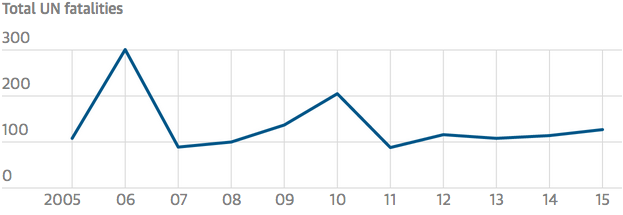
From Rwanda to Bosnia, Haiti to Congo, failures raise questions about future of United Nations blue helmetsRwanda, 1994. The nadir of many lows for UN peacekeeping. Hundreds of desperate Tutsis sought refuge on the first day of the genocide at a school where 90 UN troops were under the command of...
Is The Pope Catholic? Yes, But You Wouldn’t Know It From His Press Clips
Informe especial
Businessweek, 10.09.2015
Alexander Nazaryan
Popes don’t have batting averages, their work resisting easy quantification: Souls Saved Per Mass, Doctrinal Clarifications Per Encyclical, that sort of thing. But one measure does seem especially telling about the tenure of Pope Francis, and it is the frequency with which his face and words appear on T-shirts. You can announce...
1945: Asia’s Powers Converge at Okinawa
Análisis
Stratfor Global Intelligence, 06.09.2015
On Sept. 7, 1945, Japanese forces in the Ryukyu Islands officially surrendered to the Americans on the island of Okinawa. U.S. forces spent more than 80 days between April and June 1945 taking the island. The battle ended with 300,000 military and civilian casualties, the death of U.S. Lt. Gen. Simon Bolivar...
Mantra for 9/11: Fourteen Years Later, Improbable World
Artículo
TomDispatch, 08.09.2015
Tom Engelhardt, co-fundador del American Empire Project y miembro del National Institute
Fourteen years later and do you even believe it? Did we actually live it? Are we still living it? And how improbable is that? Fourteen years of wars, interventions, assassinations, torture, kidnappings, black sites, the growth of the American national security state to monumental...
Walk with the Devil: Evil Bargains and the Islamic State
Artículo
War on the Rocks, 02.09.2015
Patrick Porter, director académico del Strategic and Security Institute (University of Exeter)
How to counter the Islamic State is an especially difficult problem for Western policymakers, but the issue of compromise, and which devil to dance with, cannot be dodged forever.“My children,” President Franklin Roosevelt pronounced in his fatherly way...