
Columna
La Opinión de Málaga, 29.10.2018
Jorge Dezcállar de Mazarredo, Embajador de España
Hace ya unos años que el ambiente geopolítico mundial se está enrareciendo entre Rusia y los EEUU como consecuencia de los acontecimientos de Ucrania y Crimea, y también entre Estados Unidos y China con el desencadenamiento de guerras comerciales, hasta el punto de que es...
The Future of War
Editorial
Foreign Policy, 12.09.2018
Jonathan Tepperman, editor en jefe
After years of refinement, a new weapon started cutting a swath through the battlefields of Europe. It was relatively cheap, accurate, easy to use—and so powerful it could punch through the best defenses. With the touch of a trigger, anyone carrying the weapon could render expensive, state-of-the-art combat systems...
Want to improve relations with Russia? Here’s a START
Blog
Brookings Institution, 06.09.2018
Steven K. Pifer, embajador (r) y especialista norteamericano en desarme (Brookings)
President Trump has repeatedly made clear his desire to improve the troubled U.S.-Russia relationship. There is a straightforward proposal that he could make that would do so, one to which President Putin would agree and which would enhance U.S. security: Extend the 2010...
¿Un rayo de esperanza?
Columna
Wall Street International Magazine, 24.07.2018
Samuel Fernández Illanes, abogado (PUC), embajador (r) y profesor (U. Central)
Kim y Trump ahora unidos
Muchos comentarios han surgido desde la entrevista de Trump con Kim. No es mi intensión descubrir lo que otros no hicieron. Simplemente, permítaseme expresar algunos puntos de vista sobre un asunto serio, aunque no sobrepasaré lo que...¿Por qué Estados Unidos pierde todas las guerras que comienza?
Reseña de libro
Esglobal, 23.03.2018
Francis Ghilès, cientista político (Grenoble-Oxford) y analista internacional
[caption id="attachment_29077" align="alignnone" width="600"]
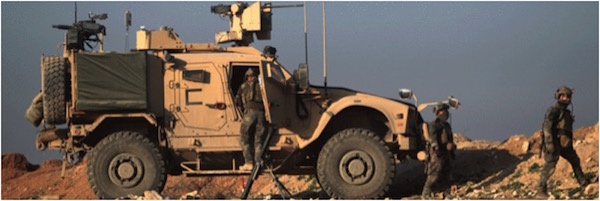 Las fuerzas especiales de EE UU en el conflicto de Irak. Ahmad Al-Rubaye/AFP/Getty Images[/caption]
-
Un profundo análisis del historial de guerra de Estados Unidos, años en los que el país ha seguido cometiendo errores...
Putin’s new arms race is all about his need to be taken seriously
Columna
The Guardian, 02.03.2018
Mark Galeotti, académico del Institute of International Relations-Prague
-
It may all have been bluff and braggadocio, but Russia’s president has little else left to motivate voters
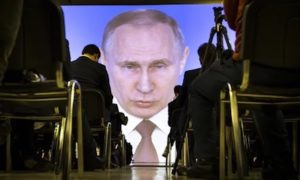 ‘Putin was not so much seeking to start a new arms race abroad, as trying to keep...
 La seguridad internacional depende de mayor diplomacia y menor rivalidad
Columna
Infobae, 13.03.2018
Roberto García Moritán, embajador (r) y ex viceministro de RREE argentino
La carrera armamentista encarada por las principales potencias es la mayor en la historia de la humanidad. La emergencia de China y el retorno de Rusia a la primera línea de la geopolítica, tras un período de introspección, marca una nueva dinámica en materia...
Putin on the nukes
Columna
Brookings, 02.03.2017
Steven K. Pifer, embajador (r) y académico norteamericano del Center for 21st Century Security and
Intelligence
- Vladimir Putin devoted one-third of his March 1 state of the union speech to new Russian weapons systems, particularly nuclear weapons that could strike the United States. What he said is worrisome, in part because it suggests he remains...
Questions about the Nuclear Posture Review
Columna
Brookimgs, 05.02.2018
Steven K. Pifer, embajador (r) y académico norteamericano del Center for 21st Century Security and
Intelligence
The Pentagon on February 2 released the Trump administration’s nuclear posture review (NPR). The NPR describes the role the administration sees for nuclear weapons in U.S. national security policy and the specific weapons systems it believes necessary to support that posture. While...
Order from Chaos: Arms and the men
Presentación
Brookings Testimonies, 16.01.2018
Steven K. Pifer, embajador (r) y académico norteamericano (Center for 21st Century Security and
Intelligence-Center on the United States and Europe)
Nuclear arms control has been a central feature of the relationship between Washington and Moscow for some 50 years, but the nuclear arms control regime appears increasingly fragile. Several factors are placing the regime...